


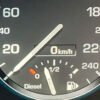

Rear Diff Lock Deactivation
? Product Description
Rear diff lock deactivation disengages the locking differential to allow normal wheel speed differentiation during turns. A driver initiates rear diff lock deactivation when returning to paved or high‑traction surfaces after off‑road use. Driving with the rear diff lock engaged on dry pavement causes excessive tire wear and drivetrain binding. Consequently, the system provides both manual and automatic methods to unlock the differential. Manual deactivation occurs via a dashboard switch, while automatic triggers include exceeding speed thresholds or turning off the ignition.
Therefore, drivers can safely transition from rough terrain to smooth roads. Moreover, the deactivation process is quick and does not require any mechanical tools. First, the driver presses the differential lock switch again to disengage it manually. Alternatively, the system automatically unlocks when the vehicle speed exceeds 40 km/h. Furthermore, shifting the transfer case to high range or turning off the ignition also triggers deactivation. Consequently, the differential returns to an open state, allowing the wheels to rotate at different speeds.
? Manual Deactivation via Switch Operation
The driver presses the electronic locking differential switch again to disengage the lock. An indicator light turns off to confirm successful deactivation. Furthermore, the system requires low or no torque load on the differential for smooth unlocking. Consequently, the driver should release the accelerator pedal during the process. The switch works for both rear and front differentials in some vehicles.
⚡ Automatic Deactivation Triggers
The system automatically disengages the rear diff lock when the vehicle exceeds 40 km/h. It also unlocks when the driver turns off the ignition or shifts the transfer case. Moreover, it disengages during anti‑lock braking system (ABS) operation. As a result, the vehicle avoids unintended locking during normal driving. The automatic triggers ensure safety even if the driver forgets to unlock manually.
? Alignment and Troubleshooting Tips
The differential locks and unlocks only when internal gears align properly. Drivers can aid alignment by driving straight and releasing the accelerator. Furthermore, a gentle steering wiggle while moving slowly can help. Consequently, the unlocking process completes without grinding or resistance. If the lock persists, reversing a short distance may resolve the issue.
✨ Key Features
- Manual deactivation via dashboard switch.
- Automatic unlocking at speeds above 40 km/h.
- Ignition off and transfer case shift triggers.
- Low‑torque requirement for smooth operation.
- Indicator light confirms lock/unlock status.
- Compatible with most electronic locking differentials.
- Preserves drivetrain integrity and tire life.
? Compatibility
This deactivation procedure applies to vehicles equipped with an electronic rear differential lock.
It works with both factory‑fitted and aftermarket locking differentials.
Furthermore, the manual and automatic methods are standard across most 4×4 and off‑road vehicles.
The system integrates with the vehicle’s stability control and ABS modules.
Most modern SUVs and pickup trucks feature this functionality.
| Car Model | Range Rover 2010-2012 |
|---|
Related products
OEM Activation
OEM Activation
OEM Activation

OEM Activation
OEM Activation
OEM Activation
OEM Activation
OEM Activation