

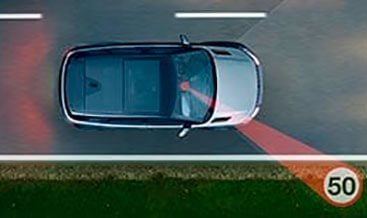


Traffic Sign Recognition and Driver Drowsy Monitor
? Product Description
Traffic Sign Recognition and Driver Drowsy Monitor are two complementary active-safety technologies that form part of modern ADAS .Traffic Sign Recognition uses a forward-facing camera to detect, classify, and display traffic signs such as speed limits, no-overtaking zones, stop signs, yield signs, and variable message signs. It helps drivers stay informed of current regulations without taking their eyes off the road.
Driver Drowsy Monitor monitors the driver’s behaviour through steering pattern analysis, lane-keeping performance, and — in advanced systems —a driver-facing infrared camera that tracks eye closure, blink rate, and head position. These systems are crucial for reducing accidents caused by fatigue, especially on long highway journeys.
? Traffic Sign Recognition – Core Functions
- Camera-based detection:A high-resolution camera scans the roadside for circular, triangular, and rectangular signs, using machine-learning algorithms to recognise symbols and text.
- When combined with navigation data, it can also display suggested speeds for curves or off-ramps.
- Overtaking restrictions: Detects no-overtaking zones and alerts the driver when a restriction begins or ends.
- Over-speed alert: If the vehicle exceeds the posted limit, TSR can trigger a visual or audible warning (often integrated with Intelligent Speed Assist).
? Driver Drowsy Monitor – Core Functions
- Steering pattern analysis: Monitors micro-corrections to the steering wheel. Frequent, abrupt, or reduced corrective inputs can indicate increasing fatigue.
- Lane-keeping performance: Works with Lane Departure Warning (LDW) to detect unintentional drifting or weaving within the lane.
- Driver-facing camera (DMS): In premium systems, an infrared camera tracks the driver’s eyes, eyelid closure (PERCLOS), blink frequency, and head tilt. It can detect both drowsiness and distraction.
- Escalating alerts: Warnings start with a subtle visual icon on the dash, then progress to an audible chime, and finally to a strong steering wheel vibration or a text prompt suggesting a break.
| Car Model | F-Pace 2016-2020 |
|---|
Related products
OEM Activation
OEM Activation
OEM Activation

OEM Activation
OEM Activation
OEM Activation
OEM Activation

OEM Activation