

Head-Up Display
The Transparent Information Hub
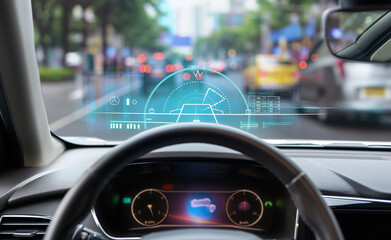
A Head-Up Display projects critical driving data directly onto the windshield. This Head-Up Display keeps the driver’s eyes firmly on the road ahead. Consequently, the Head-Up Display reduces the need for downward dashboard glances. It uses a compact projector and a special reflective film. The image appears at a comfortable focal distance beyond the hood. Therefore, the driver perceives the information as floating in space. The system adjusts brightness automatically based on ambient light. It also calibrates the projection height for different driver seating positions. This customization ensures optimal visibility for every user. The display remains clear even under direct sunlight.
Core Display Content and Customization
The Head-Up Display shows current vehicle speed in large, bold numerals. It also presents navigation turn-by-turn arrows with distance counts. Furthermore, it overlays lane departure warnings and collision alerts. Drivers can choose which data appears on the screen. They can prioritize navigation over speed or vice versa. Moreover, the system integrates with traffic sign recognition cameras. It displays posted speed limits and no-overtaking zones. This feature helps drivers stay within legal boundaries effortlessly. For hybrid or electric vehicles, it shows battery charge and range estimates. Consequently, drivers manage energy consumption more efficiently. The interface uses simple colors and icons for instant comprehension.
Augmented Reality Integration for Enhanced Guidance
Advanced versions of the Head-Up Display employ augmented reality technology. They project dynamic arrows that curve with the actual road ahead. These arrows overlay directly onto the turning point in the real world. For example, a bright green line highlights the correct lane at complex intersections. This visual cue eliminates confusion during multi-exit roundabouts. Additionally, the system highlights pedestrians or cyclists at night. It draws a subtle yellow box around potential hazards. This proactive warning gives drivers extra reaction time. The AR elements adjust their size and position as the vehicle moves. Therefore, they remain perfectly aligned with the external environment. This seamless integration makes navigation almost intuitive.
Safety Benefits and Driver Workload Reduction
Using a Head-Up Display significantly lowers cognitive load during driving. Drivers no longer shift their focal point from road to instruments. This constant focus reduces eye strain and mental fatigue. Studies show that reaction times improve by up to one second. Consequently, this one second can prevent many rear-end collisions. The display also shows adaptive cruise control status and set speed. It alerts drivers when the vehicle ahead decelerates suddenly. All warnings appear in the driver’s natural forward viewing area. Therefore, the driver never misses a critical alert. The system works harmoniously with voice commands as well. Drivers can adjust settings without taking hands off the wheel.
Future Evolution and User Experience
Future Head-Up Display systems will incorporate holographic projections. They will also display weather conditions and road friction estimates. Over-the-air updates will introduce new display themes and layouts. The system will learn individual preferences for information density. For instance, some drivers prefer minimal data, while others want full telemetry. Ultimately, the Head-Up Display transforms the windshield into a smart interface. It bridges the gap between driver and vehicle intelligence. As autonomous features grow, the display will show system status and handover requests. This transparency builds trust between human and machine. The Head-Up Display will remain a vital communication channel for years ahead.
| Car Model | Range Rover Sport 2023+ |
|---|
Be the first to review “Head-Up Display”
Related products
OEM Retrofits
OEM Retrofits
OEM Retrofits
OEM Retrofits
OEM Retrofits
OEM Retrofits
OEM Retrofits
OEM Retrofits
Reviews
There are no reviews yet.