

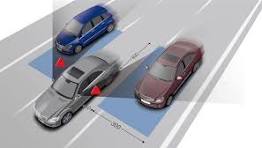


The Core Function of a Blind Spot System
A Blind Spot System uses rear-facing radar sensors to monitor adjacent lanes. This Blind Spot System actively detects vehicles hiding in the driver’s blind zones. Consequently, the Blind Spot System reduces the risk of dangerous lane-change collisions. It operates continuously at speeds above 10 km/h. The system scans both sides of the vehicle simultaneously. It ignores stationary objects like guardrails or parked cars. This intelligent filtering prevents false alarms. Drivers receive real-time information without turning their heads. The technology works seamlessly in rain, fog, or darkness. Therefore, it provides consistent reliability under all weather conditions.
Visual and Audible Warning Strategies
When the Blind Spot System detects a nearby vehicle, it illuminates a bright icon on the side mirror. This icon glows steadily if the zone remains occupied. It flashes rapidly if the driver activates the turn signal. Furthermore, an audible chime accompanies the flashing light. This dual-channel alert captures attention immediately. The chime volume adjusts automatically to cabin noise levels. Consequently, drivers never miss a critical warning. The system also integrates with the steering wheel. It provides a gentle vibration on the corresponding side. This haptic feedback offers an extra safety layer. All these cues work together without overwhelming the driver.
Smart Integration with Driving Dynamics
The Blind Spot System coordinates with other driver-assistance features. It communicates with the lane-keeping assist and adaptive cruise control. For example, it can slightly counter-steer to prevent a risky merge. It can also temporarily suppress acceleration during a close-passing situation. Moreover, the system learns the driver’s typical lane-change habits. It adjusts its sensitivity based on highway or city driving. In dense traffic, it shortens the detection range to avoid nuisance alerts. In open roads, it extends coverage for faster approaching cars. This adaptive behavior makes the system more intelligent over time. Drivers appreciate this personalized responsiveness.
Limitations and Driver Responsibility
Despite its advanced capabilities, the Blind Spot System has physical limits. It cannot detect pedestrians, cyclists, or very small objects. It also struggles with sharp curves or steep hills. Therefore, drivers must still perform manual shoulder checks. The system serves as a backup, not a replacement. It works best when drivers treat it as an additional pair of eyes. Regular maintenance ensures sensor cleanliness and proper calibration. Mud, snow, or ice can block radar signals temporarily. The dashboard displays a clear warning when sensors become obstructed. Consequently, drivers can take corrective action promptly.
Future Enhancements and User Confidence
Future iterations of the Blind Spot System will incorporate 360-degree camera fusion. They will also use predictive algorithms to anticipate cut-ins from two lanes away. Over-the-air updates will refine detection logic without workshop visits. This evolution will boost driver trust and adoption rates. Ultimately, the Blind Spot System remains a cornerstone of modern vehicle safety. It reduces stress during highway overtaking and urban merging. It empowers drivers with greater situational awareness. As technology progresses, this system will become even more proactive. It will eventually communicate with infrastructure and other vehicles. This connectivity promises a new era of collision-free mobility.
| Car Model | Evoque 2021+ |
|---|
Be the first to review “Blind Spot System”
Related products
OEM Retrofits
OEM Retrofits

OEM Retrofits
OEM Retrofits
OEM Retrofits
OEM Retrofits
OEM Retrofits

OEM Retrofits
Reviews
There are no reviews yet.